Column · @messiahwkxr978
How a Pizza Restaurant Brings People Together

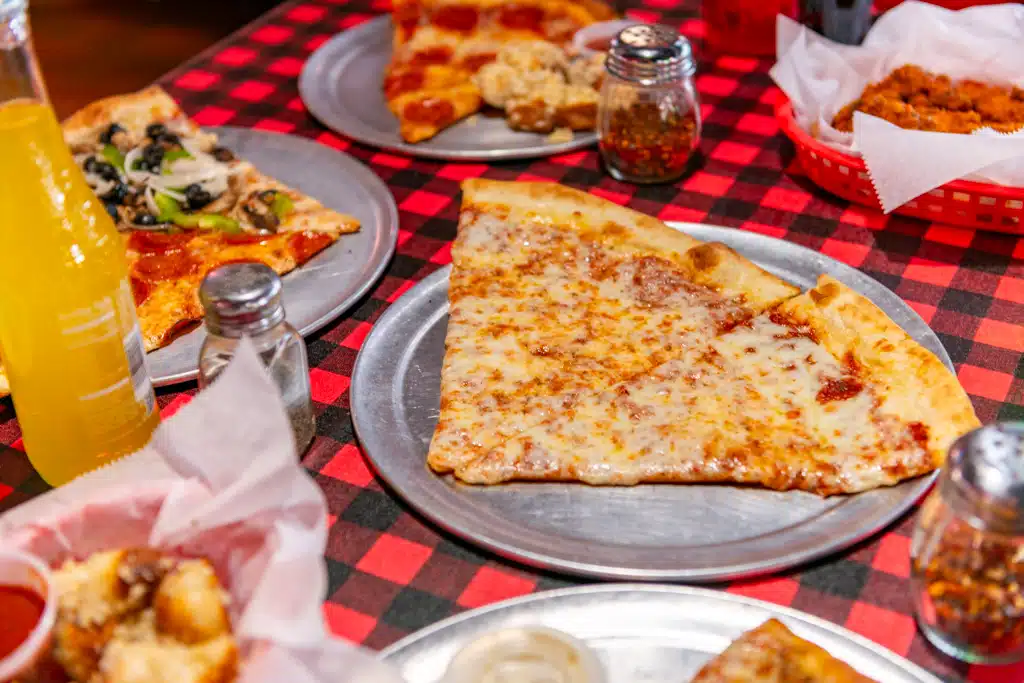
A good pizza restaurant does more than serve dinner. It creates a place where people linger, negotiate, celebrate, recover, and reconnect. That may sound sentimental until you spend enough time around one. Then the pattern becomes impossible to miss. The booth in the corner hosts first dates and post-game teams. The long table near the window fills with three generations on Friday night. Someone comes in alone after a late shift and ends up talking to the bartender for twenty minutes. Someone else walks through the door every Tuesday because the owner remembers their name and asks about their mother.
Food businesses often talk about traffic, covers, and average ticket size. Those numbers matter. They keep the lights on. But anyone who has worked in hospitality for more than a season understands that the real value of a neighborhood pizza restaurant is social. It gives people a neutral ground, affordable comfort, and a reason to gather without ceremony. Few places can do that as reliably.
Pizza holds a special place in this equation because it is unusually democratic. It works for a family with small children, a pair of coworkers, a high school team, or a retired couple splitting a simple pie and a salad. It can be casual without feeling careless, and celebratory without becoming expensive. That flexibility is one reason pizza restaurants tend to become local landmarks, even when their interiors are modest and their menus are short.
Why pizza, specifically, has this effect
Some foods are personal. A bowl of ramen can feel intimate. A steak can feel formal. Pizza invites sharing almost by default. A pie arrives in the center of the table and asks for participation. People reach, serve each other, compare slices, barter toppings, and order one more because nobody is quite ready to leave. The mechanics of the meal matter. Shared food changes the pace and shape of conversation.
There is also the matter of familiarity. Most people do not need instructions to enjoy pizza. There is no learning curve, no pressure to pronounce unfamiliar ingredients correctly, no concern about whether a dish is meant to be eaten in a particular way. That ease lowers social friction. When people feel comfortable, they talk more freely. They stay longer. They invite others back.
Price plays a practical role too. At many restaurants, the bill becomes a source of tension, especially for larger groups. Pizza softens that problem. A couple of pies, a pitcher or a few soft drinks, maybe a salad or two, and a table can feed several people without turning the meal into a budgeting exercise. It is hard to overstate how important affordability is to social life. Communities do not gather where gathering feels financially risky.
The format suits mixed preferences as well. One person wants vegetarian, another wants pepperoni, someone else avoids dairy or prefers a lighter option. A capable pizza restaurant can navigate that with half-and-half pies, different sizes, gluten-aware choices, and simple sides. The table does not need to agree on one dish in the way it might elsewhere. That practical flexibility supports the emotional goal, which is getting people in the same room with as little friction as possible.
The restaurant as a third place
Urban planners and sociologists often talk about the "third https://elliottnxxn979.opalvector.com/posts/why-a-pizza-restaurant-is-perfect-for-casual-business-meetings place," meaning a space that is not home and not work, but still feels familiar. These places have become harder to find. Rent is high, schedules are fragmented, and many social interactions have shifted online. A neighborhood pizza restaurant often fills the gap without announcing that it is doing anything noble.
It is open at hours when people actually need it. It does not demand a reservation weeks in advance. It welcomes both planned events and accidental visits. A parent can stop in with two kids after soccer practice. A group of young professionals can grab a table after a long day. An older regular can come in alone, read the paper, and still feel part of the room. That range matters. Communities are healthiest when people of different ages and routines share space.
The best operators understand this intuitively. They pay attention to lighting, noise, table spacing, and the tempo of service. If the room is too loud, grandparents stop coming. If the service is too rushed, nobody lingers. If prices drift too high, families save the visit for special occasions and the restaurant loses its role as a weekly ritual. Bringing people together is not just a poetic outcome. It is a result of dozens of practical choices made every day.
I have seen restaurants lose this magic by chasing trends that looked smart on paper. They swapped warm booths for hard minimalist seating, cut the menu too far, or pushed table turns so aggressively that regulars stopped settling in. Revenue may have ticked up briefly, but the social life drained out of the room. A pizza restaurant does not need to be old-fashioned to feel communal, but it does need to respect the reasons people come beyond hunger.
Rituals build belonging
Communities are held together by repeated, ordinary habits more than by major events. Weekly trivia night, the Friday family dinner, the post-game stop after Little League, the staff pie shared after closing, the office order every payday, these become markers in people’s routines. A pizza restaurant is well suited to host those rituals because the food is familiar enough to disappear into the background while the human interaction takes center stage.
That does not happen by accident. Staff consistency matters. When the same server notices that a child who used to need a booster seat is now ordering for herself, the family feels rooted. When the owner remembers that a regular likes extra oregano or wants his pie "well done," the interaction becomes personal without becoming intrusive. A lot of hospitality advice treats these gestures as customer retention tactics. They are that, but they are also the small stitches that hold neighborhood life together.
Even small touches can deepen this effect. A stack of high chairs near the door signals that children are expected, not merely tolerated. A counter where solo guests can eat without feeling awkward gives space to people who might otherwise stay isolated. A local team photo on the wall tells residents that their lives belong in the room. None of this is expensive. All of it matters.
The family table, expanded
For families, a pizza restaurant often serves as an extension of the home table, especially when home life is busy. Parents are tired, kids are hungry, and nobody wants the formality of a fine dining room. Pizza gives families a setting where they can eat together without the labor of shopping, cooking, serving, and cleaning. That relief is not trivial. It creates room for conversation that might not happen at home on a rushed weeknight.
Children also tend to feel at ease around pizza. That changes family dynamics. Parents spend less time negotiating every bite and more time engaging. Teenagers who would roll their eyes at a structured family outing may still agree to a pizza night, partly because it feels low-pressure. Grandparents can join without concern that the menu will alienate the younger crowd. Over time, the restaurant becomes associated with birthdays, report cards, visiting relatives, and random Tuesday dinners that later become treasured memories.
A friend who operated a mid-sized suburban pizza restaurant once told me that Sunday between five and seven o'clock was less about sales than about continuity. He would watch families file in, many of them from the same local schools and sports leagues, and he knew that his dining room was acting as a bridge between scattered schedules. Parents debriefed the week. Children traded stories. Grandparents passed slices across the table. The room was noisy, imperfect, and alive. That is community in practice.
A meeting point for friends, teams, and coworkers
Not every gathering needs significance to matter. Some of the strongest social bonds are reinforced in simple, repeatable settings, and the pizza restaurant excels here. Friends can split a few pies without anyone worrying about etiquette. Teams can come in sweaty and loud after a game and still feel welcome. Coworkers can decompress after a difficult shift somewhere else. College students can sit for two hours over one extra-large and a pitcher of soda because the setting allows it.
There is a reason so many informal celebrations land at a pizza place. Promotions, little league wins, moving-day exhaustion, exam survival, cast parties, birthdays for children too young to care about prestige, all of these fit naturally. The food is quick enough to serve a group, casual enough to reduce self-consciousness, and satisfying enough to feel like a reward.
The geometry of pizza even supports social ease. A large pie placed in the center creates a focal point that is less demanding than a formal plated meal. People can come and go slightly, grab another slice, keep talking, and settle into a rhythm. Hospitality professionals know that room flow influences mood. A pizza restaurant often gets this right simply because the format encourages movement and sharing.
The staff become part of the social fabric
In strong neighborhood restaurants, the staff are not invisible. They are participants in the atmosphere. The host who greets kids by name, the cook visible through the pass tossing dough, the delivery driver who knows which apartment buzzer sticks, the cashier who notices when a regular has had a rough day, these people turn a commercial transaction into a local relationship.
That relationship runs both ways. During hard times, communities often rally around their pizza restaurant because they understand it as part of the neighborhood’s identity, not just a place to buy food. You see this after storms, road closures, school fundraisers, and family emergencies. Restaurants donate pies to team events, sponsor youth programs, or feed volunteers after a local cleanup. In return, customers show up, buy gift cards, spread the word, and bring out-of-town visitors.
The businesses that earn this loyalty tend to follow a few principles consistently:
- They treat regulars warmly without making newcomers feel like outsiders.
- They keep quality steady, even on busy nights.
- They price with long-term trust in mind, not just short-term margins.
- They show up for local events in visible, practical ways.
- They make the room comfortable for different kinds of guests, not only their ideal customer.
None of that is flashy. All of it compounds over time.
Design choices that help people connect
A pizza restaurant does not need expensive architecture to bring people together, but it does need intentional design. The dining room should invite both conversation and ease. Booths offer privacy for families and dates. Larger communal or movable tables accommodate celebrations and team dinners. Counter seating creates a soft landing spot for solo guests. Good acoustics matter more than many owners realize. If guests have to strain to hear, they shorten the meal. If the room feels dead silent, they feel exposed. The sweet spot is lively but intelligible.
Lighting plays a similar role. Harsh overhead light can make a room feel transactional, while overly dim light can feel impractical for families. Warm, even lighting tends to support lingering. Smell matters too, especially in a pizza restaurant. The scent of baking dough, garlic, tomatoes, and toasted cheese creates anticipation before the first bite. That sensory welcome draws people in on a level more immediate than marketing.
Open kitchens can be especially powerful. Watching dough stretched by hand or pizzas pulled from the oven gives guests something to share their attention around. It creates small moments of theater. Parents point things out to children. First-time visitors ask questions. Staff and guests exchange quick comments. These micro-interactions make the room feel participatory rather than passive.
Delivery and takeout can still support community
It is easy to romanticize only the dining room, but off-premise business matters too. Delivery and takeout extend the social role of a pizza restaurant into homes, parks, offices, and school events. Many family movie nights, dorm gatherings, and late office pushes have been held together by pizza boxes on a table. The restaurant may not see the conversation directly, but it still enables it.
That said, there is a trade-off. If a pizza restaurant shifts too heavily toward app-based delivery, it can weaken its identity as a physical gathering place. Margins tighten, guest relationships get mediated through third parties, and the staff no longer recognize faces as often. Smart operators try to balance convenience with connection. They encourage direct ordering, maintain a welcoming dine-in experience, and package food in a way that travels well without feeling generic.
For community-minded owners, the question is not whether delivery is good or bad. It is how to use it without hollowing out the in-person experience that makes the restaurant valuable in the first place.
Challenges every operator has to manage
The idea of a restaurant as a community hub is appealing, but it is not effortless. Crowded nights can strain service and test patience. Large groups can dominate a room and make smaller parties feel sidelined. Family-friendly spaces can become noisy enough to deter couples or older guests. Keeping prices accessible while wages, cheese, flour, and rent rise is a constant balancing act.
Owners have to make judgment calls, often imperfect ones. Do you keep the menu broad to satisfy different tastes, or narrow it to protect quality and speed? Do you encourage long stays, or tighten table turns during peak hours? Do you host events that deepen community ties but complicate operations? The right answer depends on the market, the staff, and the concept. What matters is clarity. A pizza restaurant that knows its role in the neighborhood can make better decisions than one chasing every possible customer at once.
There is also the challenge of authenticity. Guests can tell when "community" is being used as branding rather than practice. A chalkboard slogan about togetherness means little if the room feels rushed, inaccessible, or indifferent. The deeper test is whether people feel welcome returning in ordinary clothes, with ordinary budgets, on ordinary nights.
What customers remember years later
People rarely reminisce about a restaurant by reciting its menu description. They remember who was there, what happened, and how the room felt. They remember the booth where their family always sat. They remember the owner bringing out a small dessert for a graduation. They remember a rainy evening when the place was packed and somehow the staff still made space for one more chair. They remember the server who treated their kids like full people. They remember the first meal after moving into the neighborhood, when they stopped feeling new.
That is the enduring strength of a pizza restaurant. It is not only selling dough, sauce, and cheese. It is providing a reliable setting for life to unfold among other people. The food matters enormously, of course. Bad pizza does not become beloved through goodwill alone. But once the basics are done well, the restaurant becomes something larger than its menu.
For operators, this should be both encouraging and sobering. Encouraging, because you do not need luxury finishes or a complicated concept to matter deeply to your community. Sobering, because the responsibility is real. The way you greet guests, price your menu, train your staff, arrange your room, and respond under pressure all shape whether people feel connected there.
A well-run pizza restaurant earns a rare kind of trust. It becomes a default answer to dozens of social questions. Where should we meet? Where can we take the kids? Where can the team go after the game? Where can we celebrate without making a production of it? Where can we bring someone new to town? Where can we just sit and be together for a while?
When one place can answer all of those, it becomes more than a business. It becomes part of the neighborhood’s shared language, one slice at a time.